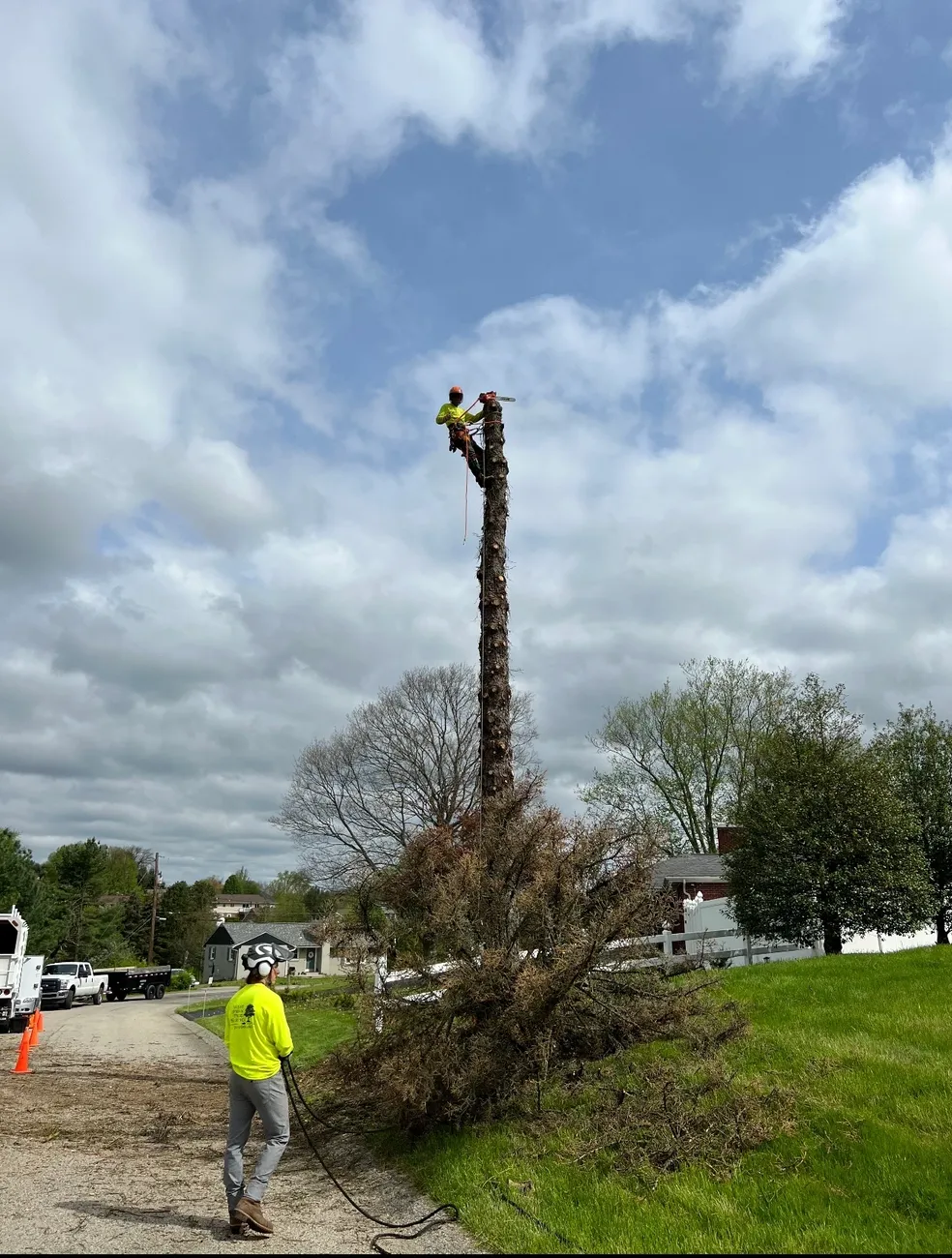
You can start by inspecting the tree for hazards like cracks or rot. Gather equipment, such as chainsaws, ropes, and safety gear. Calculate the fall direction and distance, clear two escape paths at 45-degree angles, and make your notch cuts correctly. Call a tree service in Greensburg, PA, if the tree is too close to your home or power line.
This guide shows you when trees become too risky to keep. You’ll spot the warning signs early. Keep reading to protect what matters most.
What Steps to Take When Cutting Down A Tree?
Sometimes a tree has to go. Storm damage weakens the structure, and disease spreads through branches and threatens nearby trees. Dead wood attracts termites and carpenter ants. Leaning trunks mean the roots are failing beneath your yard.
Inspect for Risks
Before making any cut, you need to first know if it’s safe to work on the tree. Hazardous trees should be handled by professional arborists. Walk around the tree first, and look up for:
- Hanging dead branches near power lines
- Vertical cracks or splits in trunks
- Trees leaning more than 15 degrees
- Hollow spots or missing bark
Gather Necessary Equipment
You can’t wing this with just any tools. Wrong equipment puts you in the hospital. Not only do you need the right tools, but it’s also important to know how to operate them safely.
What Tools Are Needed to Cut Trees?
Different types of tools are needed to cut a tree, depending on your needs. Most commonly used tools are:
- Chainsaws with sharp blades
- Hard hat, thick gloves, safety glasses, steel-toed boots.
- Felling wedges to control direction
- Rope for pulling if the tree starts going sideways
- A ladder for high cuts
Estimate the Fall
You have to know where this thing’s landing. If you get it wrong, then you may end up with a smashed fence, crushed car, or damaged roof.
How to Measure the Fall of a Tree?
Here’s an old logger trick. Grab an axe handle and hold it at arm’s length. Line the top with the tree’s peak, the bottom with the base. Now walk backward until they match up perfectly. Where you are standing is roughly how far the tree will reach when it drops.
Clear Escape Routes
It’s recommended to pick exits before you make the first cut. Clear away branches, rocks, garden tools, and anything you could trip over. Plan to move at 45 degrees angle from where the tree’s falling.
Plan and Cut the Notch
Cut a 45-degree wedge on the side facing your target drop zone. Go about one-third through the trunk, no deeper. Then make a horizontal cut to meet it.
Trim and Remove Branches
Lower branches have to go before the tree comes down. Heavy limbs throw off your calculations. They catch on neighboring trees or swing back toward you unexpectedly.
When Is the Best Time for Trimming Trees?
Late winter is the best time for trimming trees in Greensburg. Trees are not actively growing, and so wounds close up faster when spring hits. Don’t trim in summer when sap’s flowing or in wet conditions when disease spreads faster in warm weather.
Contact A Local Tree Service
If the tree is over 20 feet, then you must call a professional tree service. Renting equipment costs more than you think once you add up a day’s charges. Then there’s the risk—one mistake damages your house or puts you in traction. Check what the tree removal cost in Pennsylvania runs before you commit to DIY.
Do You Need Help to Cut Down A Tree?
West Penn Tree Service handles the removals that other companies won’t touch. We work throughout Greensburg, Irwin, and the greater Pittsburgh area. Our crews are trained and fully insured—no shortcuts, no exceptions.
You get a free estimate that lists every single cost upfront. We bring the right equipment to protect your lawn, driveway, and gardens. After the tree’s gone, we clean up everything down to the sawdust. Call us today and let’s get it done right.