Late winter to early spring is generally the best time to trim trees across Pennsylvania. During this period of time, trees are in dormancy. They are less vulnerable to stress and disease, and they recover quickly once new growth starts in spring. However, not all trees follow the same schedule. Flowering and evergreen species often need pruning after they bloom.
This guide outlines the best trimming times by season and species. It will give you a clear calendar for Pennsylvania’s most common trees. You’ll also learn when immediate trimming is necessary and when it’s better to wait for the right season.
Key Takeaways
|
What Is the Best Time to Trim Trees in Pennsylvania?
Late winter through early spring is the prime time for trimming trees in Pennsylvania. This is typically from late February to early April.
Why Does This Period Work Best for Trimming Trees?
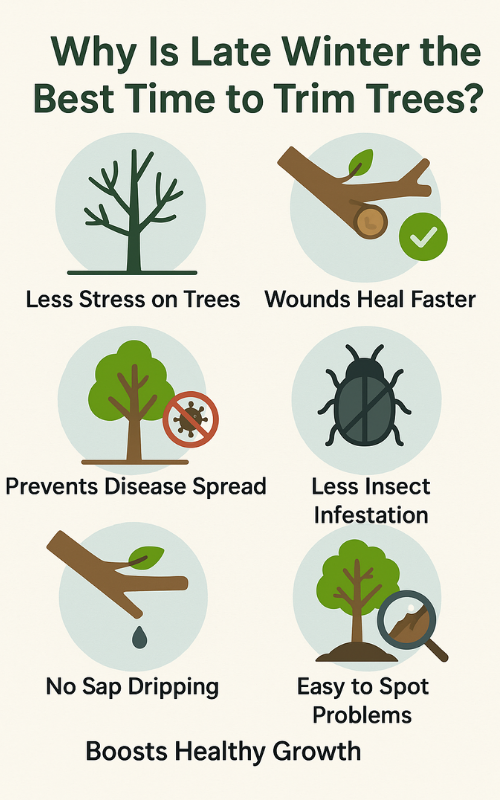
Trimming during the dormant phase has several benefits to offer. Here are the things you should know:
- The cuts put minimal stress on your trees
- The wounds heal faster as growth begins soon after the trimming
- In winter, insects and disease can not spread like in warmer months
- No sap dripping on your property or equipment
- You can easily spot problems on the bare branches
- Trees redirect energy to healthy growth areas
Which Time Is Best for Which Species?
All tree species do not follow the same trimming schedule. There are some species that you should cut in deep winter to avoid disease, while some should be trimmed after they flower.
The following table shows the best times for trimming the common tree species in Pennsylvania:
| Tree Species / Group | Best Trimming Time | When to Avoid |
| Oaks (Red, White, Black) | Deep Winter (Dec–Feb) | Apr–Jul (oak wilt risk) |
| Elms | Deep Winter (Dec–Feb) | Warm Months (Apr–Sep) |
| Maples (Sugar, Silver, Norway) | Late Winter (Feb–Mar) | Apr–Jul (sap flow & pests) |
| Black Walnut & Hickory | Late Winter (Feb–Mar) | Mid-Summer Heavy Cuts |
| Beech & Birch | Late Winter (Feb–Mar) | Mid-Fall Major Pruning |
| Hemlock, Spruce & Pine | Light shaping: Late Spring–Early Summer (May–Jun); Deadwood cleanup: Winter | Cutting into brown interior wood |
| Flowering Trees | After Bloom (Late Spring) for flowers; Late Winter for shape | Before Bloom |
| Fruit Trees (Apple, Pear, Peach, Plum) | Late Winter to Early Spring (Feb–Apr) | Heavy Summer Cuts |
| Maple-Leaf Sycamore & Sweetgum | Late Winter (Feb–Mar) | Late Spring–Early Summer (sap bleed) |
| Willow & Poplar | Mid-Winter (Jan–Feb) | Late Summer (weak regrowth) |
Why Does The Timing of Trimming Your Trees Matter?
Trimming your trees in each season has its own distinct impacts. Different species have their own ideal windows, too. Here’s why timing matters so much.
Helps You Control Disease and Decay
Naturally, trimming during dormancy helps reduce pest and fungal activity. It keeps your trees healthier through the year.
What Are the Common Tree Diseases that Trimming Can Help Prevent?
Regular tree trimming helps stop the spread of harmful infections by removing weak or diseased branches early. It also improves air circulation, making trees less vulnerable to moisture-related diseases. Common diseases that can be prevented through trimming include:
- Anthracnose
- Powdery Mildew
- Fire Blight
- Oak Wilt
- Dutch Elm Disease
Less Sap Flow and Less Stress
Some Pennsylvania trees, such as maples and birches, tend to bleed sap in early spring. Trimming them in late winter gives them ample time to heal before new growth begins.
What Problems Do Sap Cause to Trees?
Excess sap flow can be a sign that a tree is stressed, damaged, or infected by pests or disease. When too much sap leaks out, it can weaken the tree and attract insects like ants and beetles that cause further harm.
More Growth and Structural Benefits
When branches are bare in winter, it’s much easier to spot weak attachments. You can find crossing limbs and poor structure quite easily. After trimming, trees naturally redirect stored energy into healthy branches. It promotes improved new growth in spring, and air circulation throughout the canopy, which reduces the risk of fungal diseases.
How Does Pennsylvania Weather Influence the Tree Trimming Plan?
The distinct weather of Pennsylvania dictates when you should trim your trees. There are cold snaps, ice storms, and summer heat, all of which impact trimming. Understanding these patterns helps you schedule work at the right time.
How Do Freeze–Thaw Cycles Affect Tree Trimming in Pennsylvania?
Freeze–thaw cycles happen when temperatures fluctuate between freezing at night and warming during the day. These swings are common across Pennsylvania in late fall and early spring. When you make fresh cuts during this time, the exposed wood absorbs moisture, freezes, then thaws repeatedly. It causes the cells to expand, contract, and prevent healing..
How Does Heavy Snow or Ice Impact Tree Trimming?
Winter storms in Pennsylvania can break or bend branches with the weight of snow and ice. After severe weather, you should inspect your trees for cracks or hanging limbs that can fall later. Weak or damaged branches should be removed without delay. It will help you prevent injury or property damage.
Do Heat Waves and Drought Conditions Affect Tree Pruning in Summer?
Summer heat and dry spells can stress Pennsylvania trees, making recovery from pruning more difficult. Trimming during high heat drains a tree’s stored energy and slows its natural healing process. During heat waves, we should limit pruning to light shaping or removal of deadwood only.
How Would I Know Whether My Trees Need to be Trimmed?
Trimming is essential for your tree’s health and safety. If you’re unsure whether it’s time to trim, watch out for these common warning signs:
- Branches hanging low or scraping against your roof
- Dead, cracked, or broken limbs
- Branches crossing or rubbing together
- A canopy that’s too dense and blocks sunlight
- Trees leaning heavily or growing unevenly
- Limbs blocking your driveway or walkway
- Branches growing too close to power lines
What To Avoid When Trimming Trees?
If you take wrong steps while trimming, it can weaken your tree’s overall structure and condition. It invites disease and decay. Understanding what to avoid during trimming will protect your investment in tree care. Here are the most common things you should avoid:
- Avoid trimming oaks and elms except during deep winter, when the risk of disease is lowest.
- Never cut conifers back into the bare brown interior wood, as it rarely regrows properly.
- Don’t remove more than 25% of a tree’s live canopy in a single year. It can stress or weaken the tree.
- Always keep pruning tools clean, since dirty blades can spread diseases between trees.
- Stay clear of power lines and leave any risky work to professionals.
- Avoid topping trees or leaving long stubs, as this leads to decay and poor branch regrowth.
Keep Your Trees in Pennsylvania Healthy with Expert Trimming Service
West Penn Tree Service provides expert tree care across Pennsylvania. Our team has been helping homes and businesses for years. We understand the local tree species and know the best times to trim each one to keep them healthy and disease-free.
We know which trees need pruning in winter, and which should wait until after blooming or spring growth. Our skilled arborists follow proper pruning standards on every job, ensuring strong, well-shaped trees. From routine trimming to emergency storm cleanup, we handle it all safely and efficiently. Call us today to get a free quote.